 Image 1 of 2
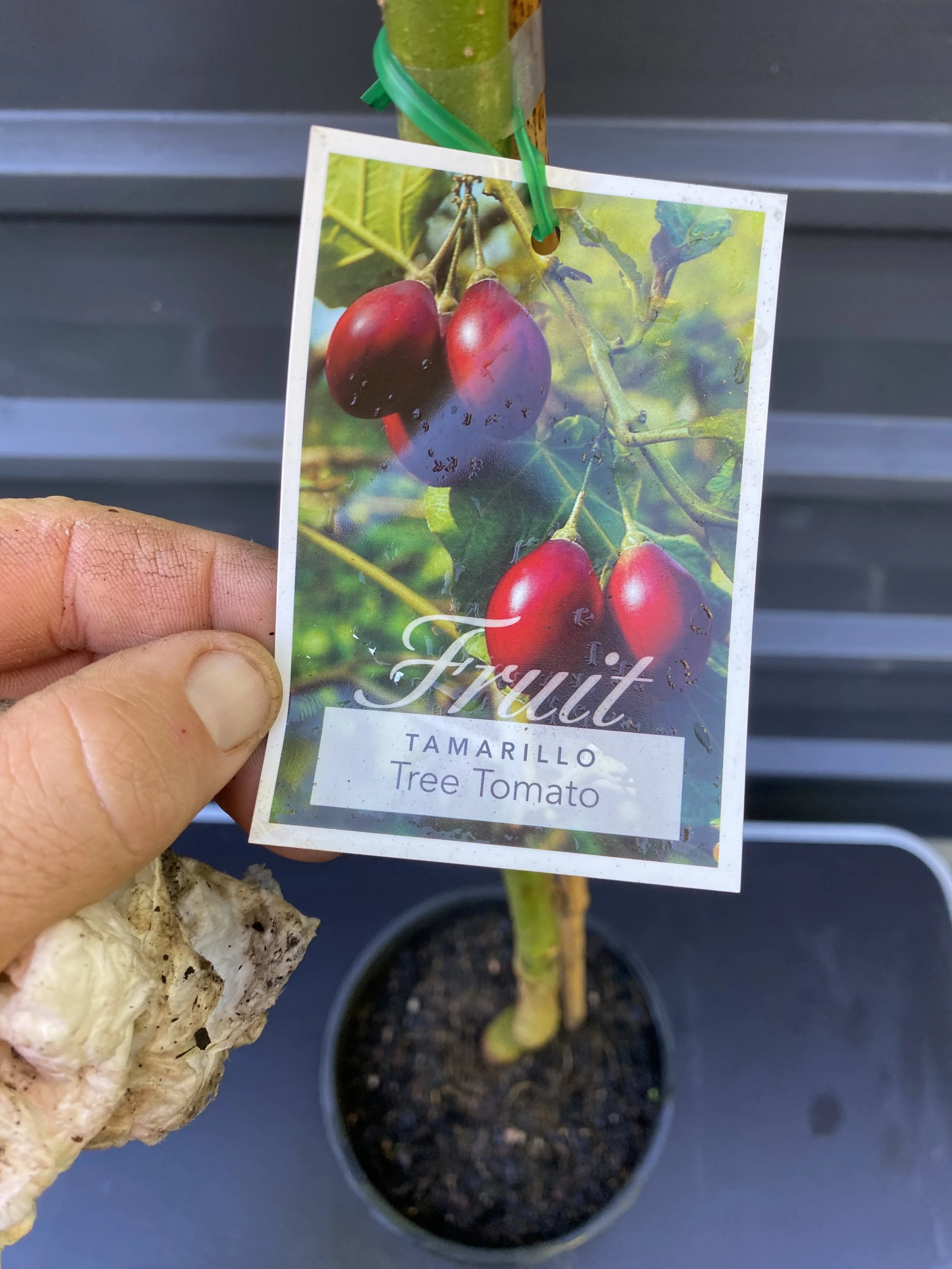 Image 2 of 2
Tamarillo (Solanum betaceum) 200mm
$45.00
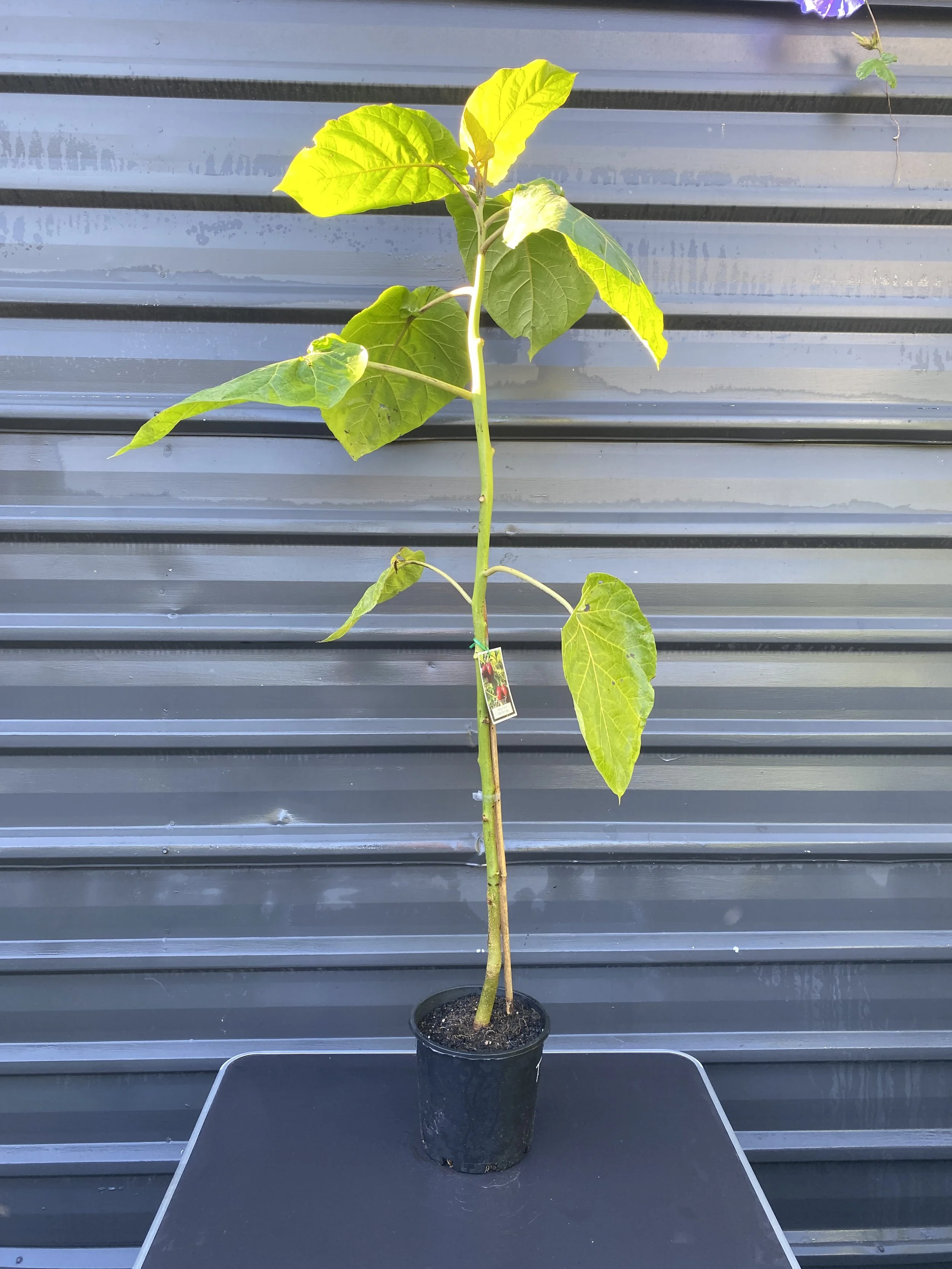
Tamarillo, also known as the tree tomato, is a fast-growing subtropical fruit tree producing egg-shaped fruit with a tangy, complex flavour. The plant has large, soft foliage and a tropical appearance, forming a small, upright tree with a relatively short lifespan but high productivity. It is well suited to sheltered gardens in warmer climates and benefits from protection from frost and strong winds.
Fruit Colour: Red, orange, or golden yellow (variety dependent)
Fruit Shape: Oval to egg-shaped
Fruit Size: Small to medium (6–10 cm long)
Flavour: Tangy, sweet-sour, slightly savoury with tropical notes
Fruit Season: Late autumn to winter
Cropping Habit: Moderate to heavy crops once established, often biennial-heavy
Best Uses: Fresh eating (scooped), desserts, chutneys, sauces, juices
Light requirement: Full sun to part shade
Water requirement: Moderate to high during active growth and fruiting
Watering frequency: Regular; prefers consistently moist soil but not waterlogged conditions
Soil: Rich, well-draining soil high in organic matter
Skill level: Intermediate (sensitive to frost and wind exposure)
Growth rate: Fast
Suitable for container gardens: Yes, in large containers with regular feeding
Mature Height: 3–5 m
Mature Width: 2–3 m
Seasonality: Semi-deciduous to evergreen in warm climates
Drought Tolerant: Low; requires consistent moisture for best growth and fruiting
Frost Tolerant: Low; damaged by frost and requires protection
Wind Tolerant: Low to moderate; large leaves are easily damaged
Leaf colour: Large, soft mid-green
Leaf Variegation pattern: No
Size of leaf: 15–30 cm, broad, heart-shaped and soft-textured
Tamarillo, also known as the tree tomato, is a fast-growing subtropical fruit tree producing egg-shaped fruit with a tangy, complex flavour. The plant has large, soft foliage and a tropical appearance, forming a small, upright tree with a relatively short lifespan but high productivity. It is well suited to sheltered gardens in warmer climates and benefits from protection from frost and strong winds.
Fruit Colour: Red, orange, or golden yellow (variety dependent)
Fruit Shape: Oval to egg-shaped
Fruit Size: Small to medium (6–10 cm long)
Flavour: Tangy, sweet-sour, slightly savoury with tropical notes
Fruit Season: Late autumn to winter
Cropping Habit: Moderate to heavy crops once established, often biennial-heavy
Best Uses: Fresh eating (scooped), desserts, chutneys, sauces, juices
Light requirement: Full sun to part shade
Water requirement: Moderate to high during active growth and fruiting
Watering frequency: Regular; prefers consistently moist soil but not waterlogged conditions
Soil: Rich, well-draining soil high in organic matter
Skill level: Intermediate (sensitive to frost and wind exposure)
Growth rate: Fast
Suitable for container gardens: Yes, in large containers with regular feeding
Mature Height: 3–5 m
Mature Width: 2–3 m
Seasonality: Semi-deciduous to evergreen in warm climates
Drought Tolerant: Low; requires consistent moisture for best growth and fruiting
Frost Tolerant: Low; damaged by frost and requires protection
Wind Tolerant: Low to moderate; large leaves are easily damaged
Leaf colour: Large, soft mid-green
Leaf Variegation pattern: No
Size of leaf: 15–30 cm, broad, heart-shaped and soft-textured