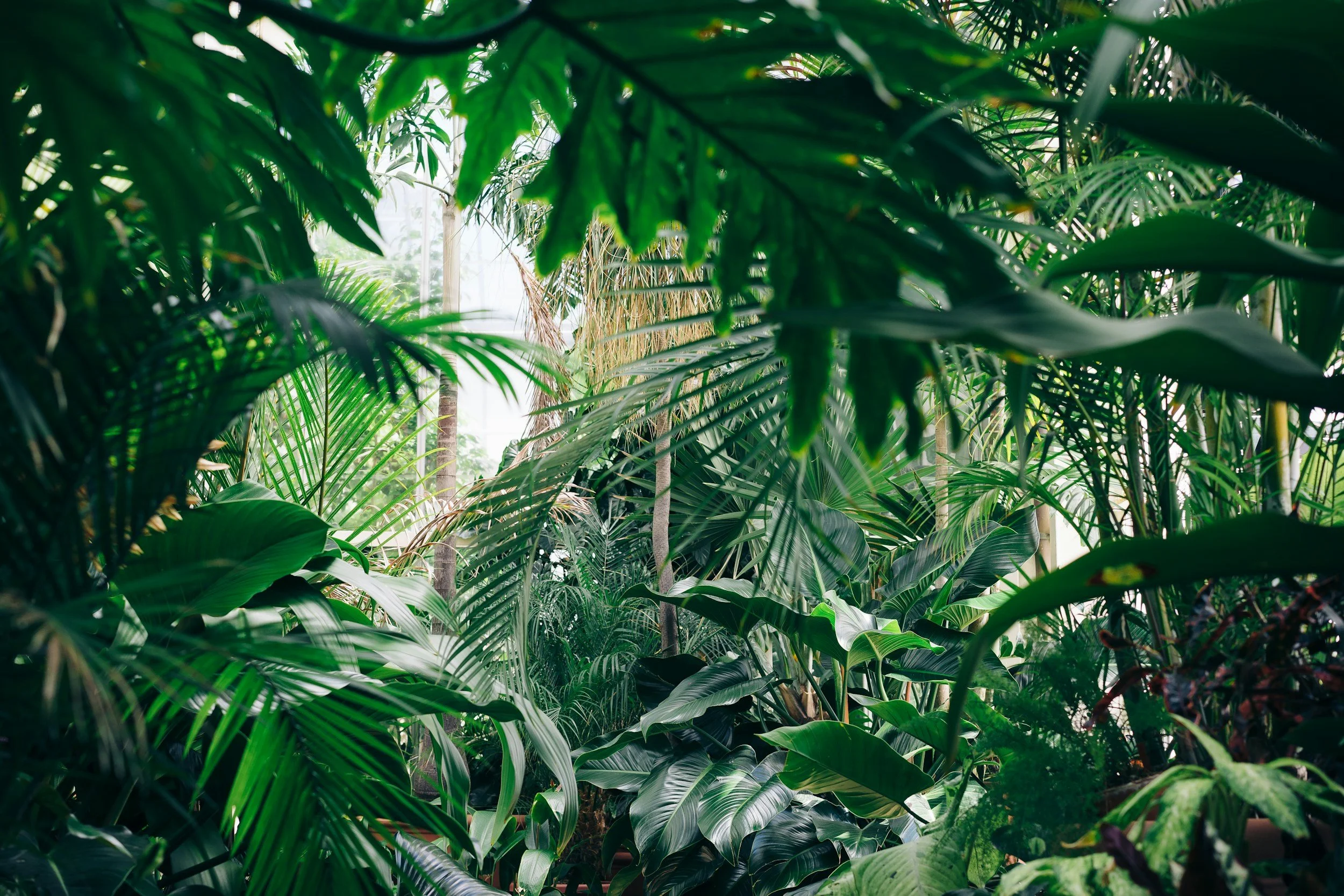
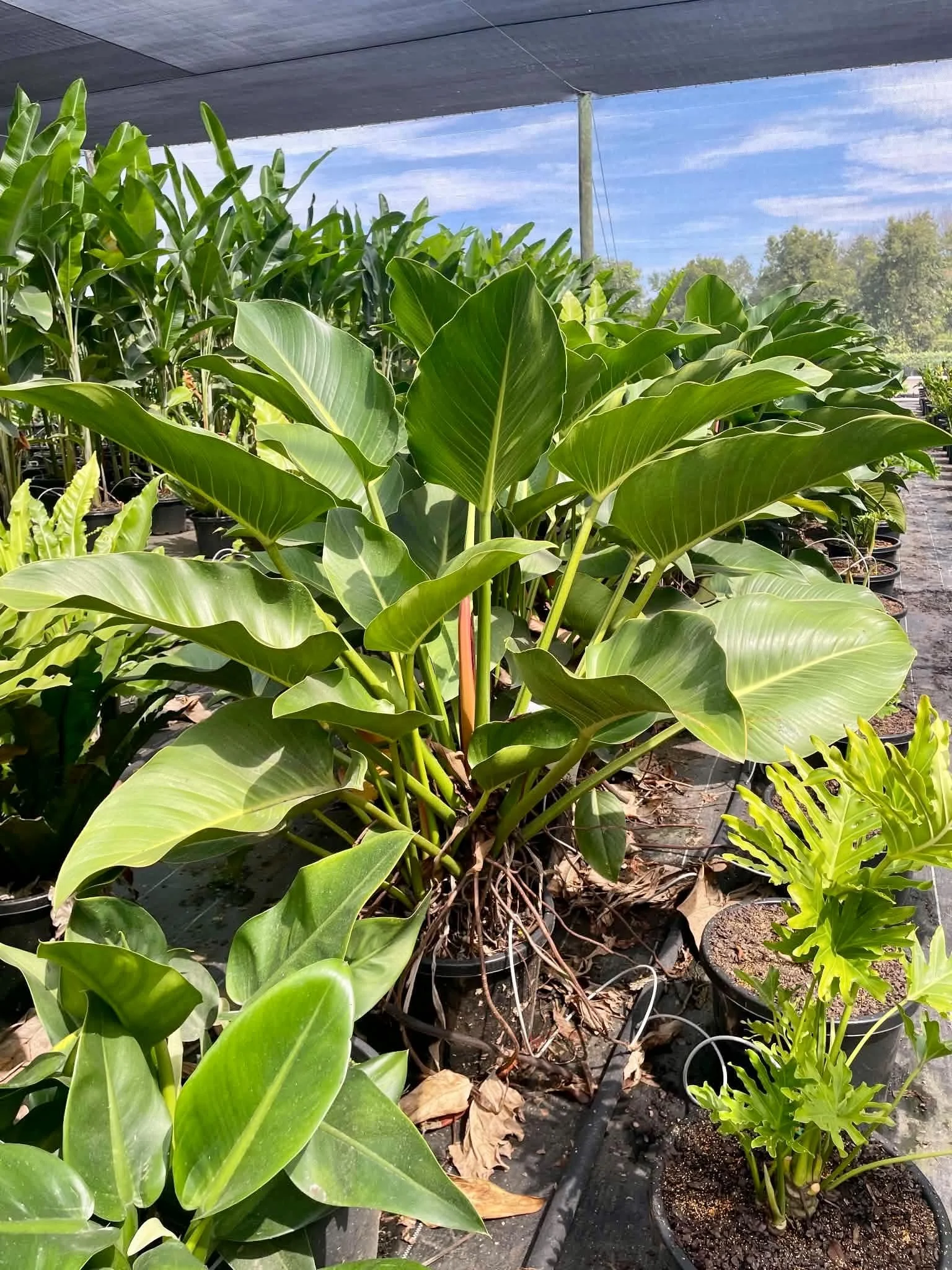
The Philodendron 'Congo Green' (or Green Congo) is a robust, highly popular tropical houseplant prized for its large, glossy, deep green leaves and strong upright growth habit. Unlike many trailing or climbing philodendrons, the Green Congo is "self-heading", meaning it grows from a central clump and supports its own weight without needing a totem, moss pole, or trellis. Toxic to pets and humans. The plant contains calcium oxalate crystals which cause severe mouth and throat irritation if chewed or ingested.
Light requirement: Thrives in bright, indirect sunlight.
Water requirement: Moderate
Watering frequency: Allow the top 3–5 cm of soil to dry out completely before watering again. It prefers being slightly underwatered rather than overwatered, as soggy soil easily leads to root rot.
Soil: Requires a chunky, highly aerated, well-draining potting mix (ideally an aroid mix containing orchid bark and perlite).
Skill level: Easy
Growth rate: Moderate
Suitable for container gardens: Yes, ideal for pots and decorative indoor planters
Mature Height: Indoors: It typically reaches a mature height of 60-90 cm. Planted outdoors (Protected/Tropical Climates): In ideal landscape environments, it grows significantly larger, reaching a mature height of 1-1.5m.
Mature Width: 60-90cm Indoors, 70-100cm outdoors.
Seasonality: Evergreen
Drought Tolerant: Moderately to highly drought-tolerant
Frost Tolerant: Low
Wind Tolerant: Moderate
Leaf colour: Features thick, structural, glossy deep green leaves sitting on stiff stems.
Leaf Variegation pattern: No
Size of leaf: Glossy green leaf can reach up to 40 to 60 cm
Flower: Spathe (a thick, protective, leaf-like hood that wraps around the center and is typically a subtle green or greenish-white) and Spadix (a rigid, upright spike nestled inside the spathe that holds hundreds of microscopic true flowers) Cream to pale green (rare indoors and not considered ornamental). When the plant blooms, the inflorescence emits a distinctly sweet, heavy fragrance intended to attract pollinators in the wild. Extremely rare for it to flower when grown indoors as a houseplant.