 Image 1 of 2
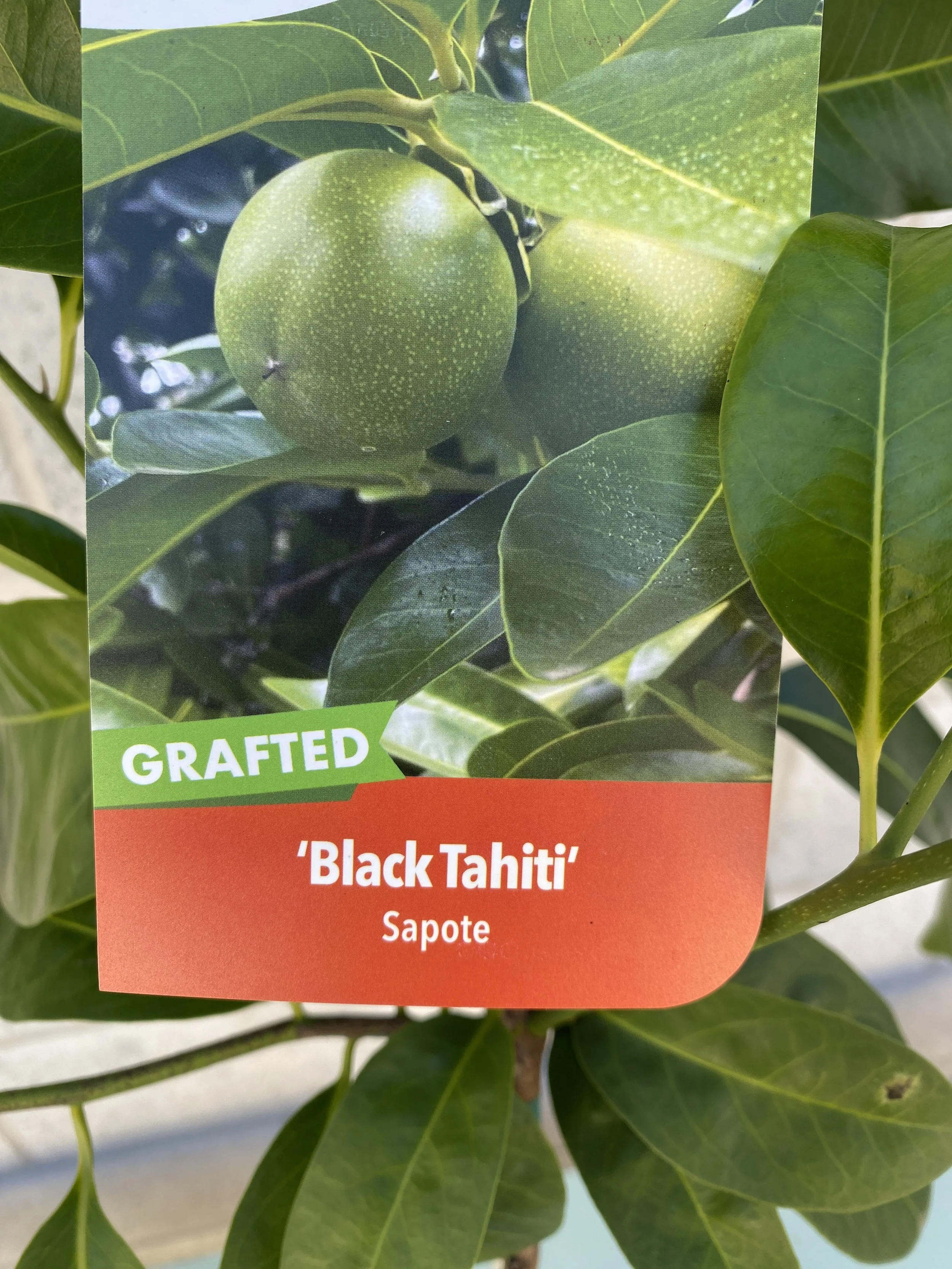 Image 2 of 2
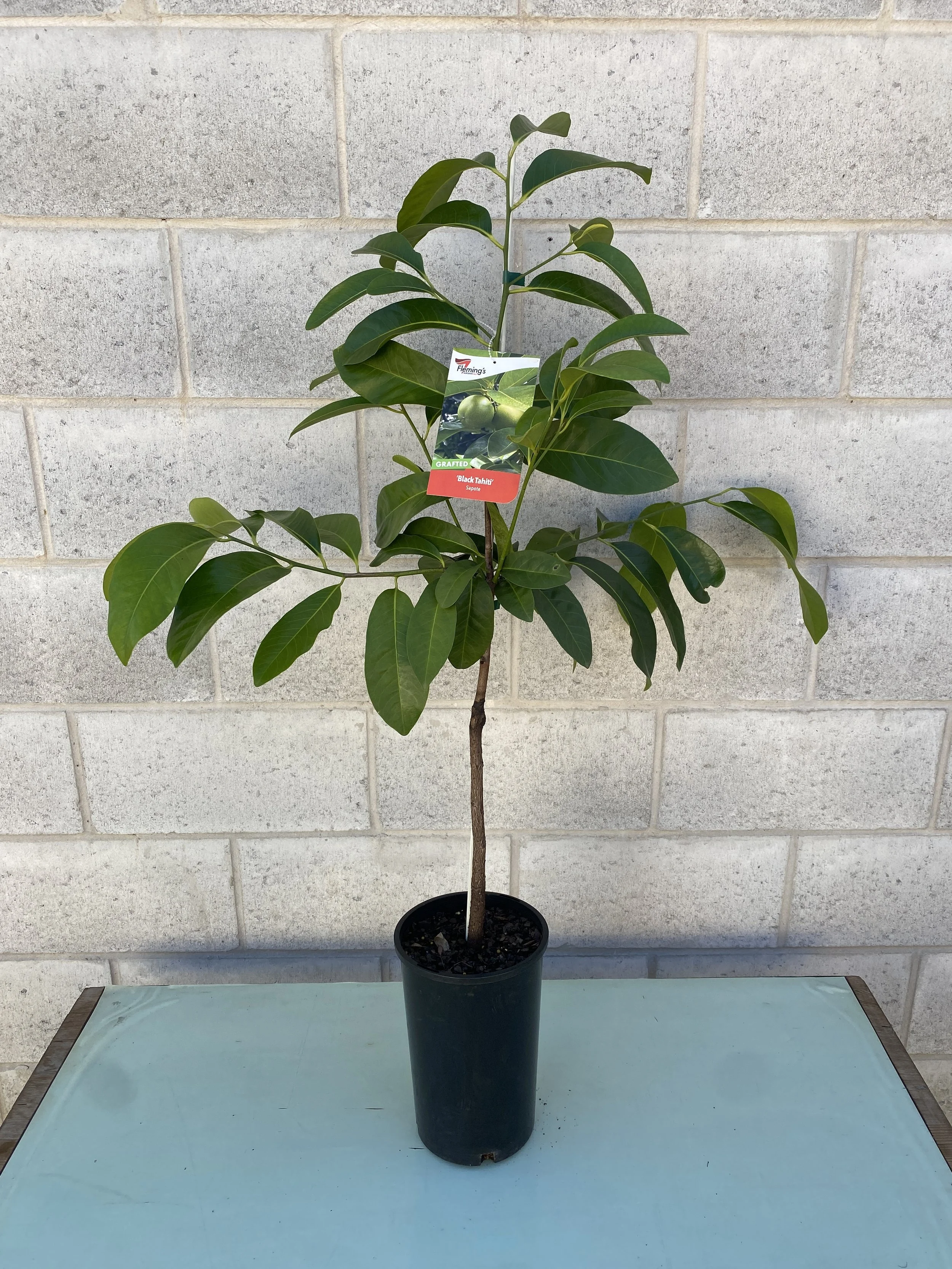
Sapote – Black Tahiti (Diospyros digyna) 165mm
$59.00
Black Sapote ‘Tahiti’ is a tropical fruit tree best known for its dark, rich, chocolate-like flesh when fully ripe. It produces green, persimmon-like fruit that transforms into a soft, custard-textured pulp with a sweet, pudding-like flavour. The tree has a broad, evergreen canopy and a strong ornamental presence, making it both a productive and shade-providing species in warm climates.
Fruit Colour: Green skin, ripening to olive-green to slightly yellow-green; flesh turns dark brown/black when ripe
Fruit Shape: Round to slightly flattened
Fruit Size: Medium to large
Flavour: Sweet, mild, chocolate-custard-like when fully ripe
Fruit Season: Late autumn to winter
Cropping Habit: Moderate to heavy crops once mature, seasonal but reliable in warm climates
Best Uses: Fresh eating (dessert fruit), smoothies, baking, fruit pulp use in desserts
Light requirement: Full sun to part shade
Water requirement: Moderate to high during active growth and fruiting
Watering frequency: Regular; prefers consistently moist soil during establishment and fruit development
Soil: Well-draining, fertile soil with high organic content
Skill level: Intermediate (sensitive to cold and needs warm conditions)
Growth rate: Moderate
Suitable for container gardens: Possible when young, but best suited to in-ground planting in warm climates
Mature Height: 6–10 m
Mature Width: 4–7 m
Seasonality: Evergreen
Drought Tolerant: Moderate once established
Frost Tolerant: Low; sensitive to cold and frost damage
Wind Tolerant: Moderate; young trees benefit from wind protection
Leaf colour: Glossy deep green
Leaf Variegation pattern: No
Size of leaf: 10–20 cm, elongated oval and leathery
Black Sapote ‘Tahiti’ is a tropical fruit tree best known for its dark, rich, chocolate-like flesh when fully ripe. It produces green, persimmon-like fruit that transforms into a soft, custard-textured pulp with a sweet, pudding-like flavour. The tree has a broad, evergreen canopy and a strong ornamental presence, making it both a productive and shade-providing species in warm climates.
Fruit Colour: Green skin, ripening to olive-green to slightly yellow-green; flesh turns dark brown/black when ripe
Fruit Shape: Round to slightly flattened
Fruit Size: Medium to large
Flavour: Sweet, mild, chocolate-custard-like when fully ripe
Fruit Season: Late autumn to winter
Cropping Habit: Moderate to heavy crops once mature, seasonal but reliable in warm climates
Best Uses: Fresh eating (dessert fruit), smoothies, baking, fruit pulp use in desserts
Light requirement: Full sun to part shade
Water requirement: Moderate to high during active growth and fruiting
Watering frequency: Regular; prefers consistently moist soil during establishment and fruit development
Soil: Well-draining, fertile soil with high organic content
Skill level: Intermediate (sensitive to cold and needs warm conditions)
Growth rate: Moderate
Suitable for container gardens: Possible when young, but best suited to in-ground planting in warm climates
Mature Height: 6–10 m
Mature Width: 4–7 m
Seasonality: Evergreen
Drought Tolerant: Moderate once established
Frost Tolerant: Low; sensitive to cold and frost damage
Wind Tolerant: Moderate; young trees benefit from wind protection
Leaf colour: Glossy deep green
Leaf Variegation pattern: No
Size of leaf: 10–20 cm, elongated oval and leathery