
 Image 1 of 1
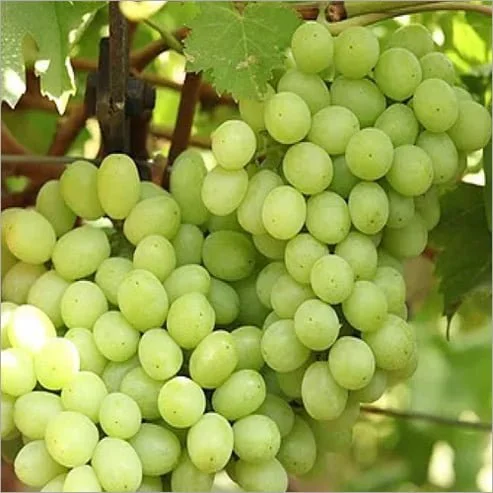
Grape- White Sultana/ Thompson seedless (Vitis vinifera) 200mm
The different names are purely regional and linguistic variations for the same exact plant. "Thompson Seedless" is the standard name used in the United States, named after William Thompson, who introduced the Persian variety to California in 1872. Alternatively "White Sultana" (or simply Sultana / Sultanina) is the name used in Australia, the United Kingdom, New Zealand, Europe, and South Africa. Originating from Asia Minor (modern-day Turkey), this legendary variety is celebrated for its extreme multi-purpose versatility, serving as a staple crisp table snack, the gold standard for drying into sweet golden sultanas, and a fundamental blending grape in winemaking. It is less suited to highly humid coastal areas where the tight bunches can trap moisture and catch fungal diseases.
Fruit Colour: Translucent pale green or yellow-green hue
Fruit Shape: Oval-shaped berries that form large, densely filled, conical clusters
Fruit Size: Small-medium
Flavour: Firm, juicy, and completely seedless pulp with thin skin. It delivers a sweet, rich sugar profile nicely balanced with a crisp, refreshing acidity.
Fruit Season: Mid-season variety. In Australia, the fresh fruit typically reaches peak maturity and ripeness between February and March (stretching into April in cooler regions).
Cropping Habit: The cropping and fruiting habit of the White Italia grapevine is defined by exceptional reliability, outstanding bud fertility, and high-volume yield potential with very large, heavy, conical clusters.
Best Uses: Fresh eating, freezing, salads, homemade golden sultanas, baking, stuffed dolmades, verjuice (low-acid alternative to vinegar), summer shade.
Light requirement: Full sun, 6-8 hours to thrive, successfully mature fruit & maintain a healthy vine that produces sweet grapes.
Water requirement: Moderate to high. Always apply water directly to the soil using drip irrigation, a soaker hose, or a bucket. Because they have a deep root system, the golden rule for watering grapevines is deep and infrequent, rather than shallow and daily.
Watering frequency: Needs moderate, regular watering—especially during the peak growing and fruiting season.
Soil: Deep, well-draining sandy loam or rich loam soil with an optimal pH between 6.0 and 7.5.
Skill level: Moderate.
Growth rate: Exceptionally fast, highly vigorous growth rate. Because White Sultana's lowest buds are often completely infertile, it must be cane-pruned rather than spur-pruned. During winter dormancy, you will need to hack away roughly 90% of the old summer wood.
Suitable for container gardens: Use a 50cm-60cm wide and deep container (60-75L). Choose terracotta, half wine barrels, or light-colored resin pots and use structural support like a sturdy vertical trellis frame, heavy timber stake, or strong tomato cage directly into the pot at planting time. Secure the primary climbing stems to this frame to shield them from heavy winds.
Mature Height: 2-5m when trained onto a standard garden structure.
Mature Width: 2-3m
Seasonality: White Sultana (Thompson Seedless) grapes spans from mid-summer through autumn, with the fresh fruit ripening for picking between February and March across Australia. Subtropical/Northern Zones (QLD): High heat accumulation accelerates the vine's timeline dramatically, pushing the harvest window forward to start as early as November.
Drought Tolerant: Drought-tolerant once they are fully established
Frost Tolerant: Fully frost-tolerant when they are completely dormant during the winter.
Wind Tolerant: Moderate wind tolerance but require solid physical support and protective structural boundaries to prevent crop damage.
Leaf colour: Spring; shiny, pale chartreuse or light lime-green.. Summer; rich vibrant green. Autumn; beautiful, uniform palette of glowing golden yellow and light amber before shedding entirely for the winter months.
Leaf Variegation pattern: No.
Size of leaf: 14-18cm length x width.