
 Image 1 of 1
The White Genoa fig (Ficus carica 'White Genoa') is an Italian heirloom variety highly prized for its sweet, honey-like flavour and exceptional performance in cooler, coastal, and temperate climates. This variety is self-fertile, meaning you only need to plant one tree to get an abundance of fruit. Be mindful and do not plant an in-ground fig tree within 5m of home foundations, concrete paths, retaining walls, ceramic pipes, or septic lines. Their powerful roots can lift concrete and compromise underground plumbing.
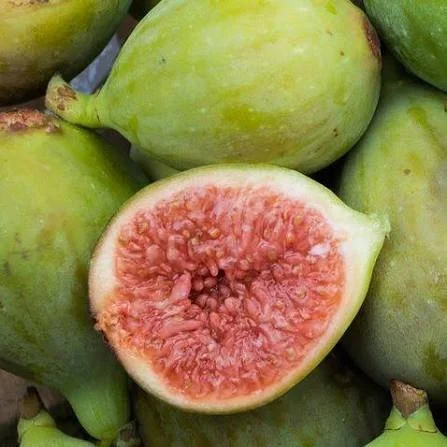
Fruit Colour: Thin, yellow-green skin. Flesh is soft, juicy, strawberry-pink to amber pulp containing very few seeds.
Fruit Shape: Medium to large.
Fruit Size: Pear-shaped fruit featuring thin, yellow-green skin.
Flavour: Mild, delicate, and deeply sweet with distinct honey undertones. It has a slightly less intense flavour than darker varieties like the Black Genoa, making it highly versatile.
Fruit Season: Early summer, Dec to Jan. Then again in Late Autumn, Feb to April.
Cropping Habit: The White Genoa fig has a bifere (two-crop) cropping habit, meaning a healthy tree will reliably produce fruit twice a year. Because of their high sugar content, the challenge will be protecting the ripening crop from birds using netting. Prune during late winter while the tree is dormant to shape its height, clear out dead wood, and stimulate new fruiting branches for the coming season.
Best Uses: Perfect for eating fresh off the tree, adding to salads, adding to pizzas or cakes, jams and chutneys, drying, stewing & poaching.
Light requirement: Require a full sun position to sweeten and ripen the fruit properly.
Water requirement: Moderate
Watering frequency: Provide deep, regular watering once or twice a week during the hot fruiting season, then dial back significantly as the tree enters winter dormancy.
Soil: Plant in well-draining, highly fertile soil with a preferred pH between 6.0 and 6.5.
Growth rate: Fast, vigorous, habit that naturally forms a broad, rounded, dome-shaped canopy.
Suitable for container gardens: Yes but require maintenance as potted figs have a restricted root zone and dry out very rapidly under the Australian summer sun. With this variety, limiting root space actually encourages heavier fruiting so it is an ideal variety to grow in large pots or half-wine barrels.
Mature Height: 3-5m
Mature Width: 3-5m
Seasonality: Deciduous
Drought Tolerant: Highly tolerant of drought once established,
Frost Tolerant: Highly tolerant frost once established, but they perform poorly against strong, sustained winds.
Wind Tolerant: Moderate, perform poorly against strong, sustained winds.
Leaf colour: Spring (Bright Lime Green), Summer (Deep Forest Green) and Autumn (Vibrant Golden Yellow).
Leaf Variegation pattern: No
Size of leaf: Exceptionally large, broad, and prominent; 15-30cm from the base of the stem to the tip, and 12-25cm across the widest point of the lobes.