
 Image 1 of 1
Actinidia chinensis 'Dexter' (commonly classified as Actinidia deliciosa 'Dexter') is a popular female fuzzy kiwifruit variety specifically selected for its ability to thrive in warmer, low-chill climates. Discovered in Queensland, Australia, as a chance seedling of the industry-standard 'Hayward' variety, 'Dexter' yields sweet green-fleshed fruit with a slightly more elongated shape than its parent. Because kiwifruit vines are dioecious (unisexual), 'Dexter' is a female vine and requires a compatible male pollinator (such as 'Matua' or 'Chieftain') planted nearby to set fruit. One male vine can pollinate up to 8 female vines.
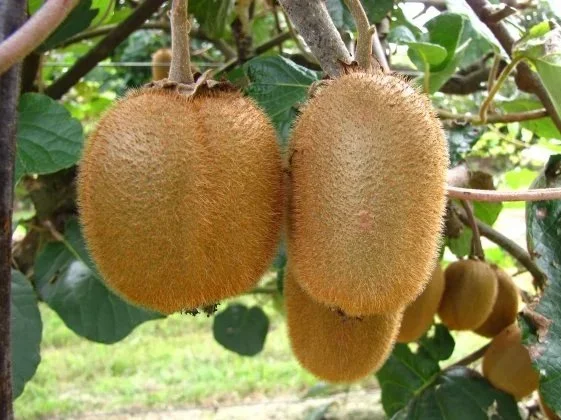
Fruit Colour: Greenish-brown to copper-brown fuzzy skin, inside the flesh is vibrant, translucent emerald-green pulp.
Fruit Shape: It produces medium to large egg-shaped (ellipsoid) berries. Compared to the standard commercial 'Hayward' variety, 'Dexter' fruit is notably more elongated and cylindrical.
Fruit Size: 50-100 grams
Flavour: 'Dexter' is highly regarded for its excellent, refreshing flavour. It offers a perfectly balanced sweet-and-sour (subacid) profile, combining a tropical brightness reminiscent of citrus, berry, and melon with a rich, sugary sweetness when fully mature.
Cropping Habit: It is a vigorous, deciduous climbing vine and requires a sturdy trellis, pergola, or post structure for support. Fruits from Autumn to Winter. Typically begins bearing fruit 1 to 2 years after planting. Heavy winter pruning is essential to remove spent wood and manage the vigorous framework, as flowers develop on the current season's growth arising from last year's canes.
Best Uses:
Light requirement: Full sun
Water requirement: Moderate
Watering frequency: Regular during establishment; occasional deep watering once established
Soil: Thrives in rich, deep, well-draining soil. It needs consistent, moderate watering; vines are shallow-rooted and easily stressed by drought.
Skill level: Beginner
Growth rate: Moderate
Suitable for container gardens: Yes
Mature Height: 2-5m high
Mature Width: 6–8m wide if left unpruned
Seasonality: Deciduous
Drought Tolerant: Low
Frost Tolerant: Protect young shoots from late frosts.
Wind Tolerant: Low. Protect young shoots from strong winds
Leaf colour: Deep, dark forest green.
Leaf Variegation pattern: No
Size of leaf: large, broad, and prominent, 15-25cm long and 7.5-13cm wide
Flower: The blossoms are relatively large, typically measuring 4-6cmin diameter and when the flowers first open, they are a clean, creamy white, changing to buff, orange-yellow, or pale apricot colour.