
 Image 1 of 1
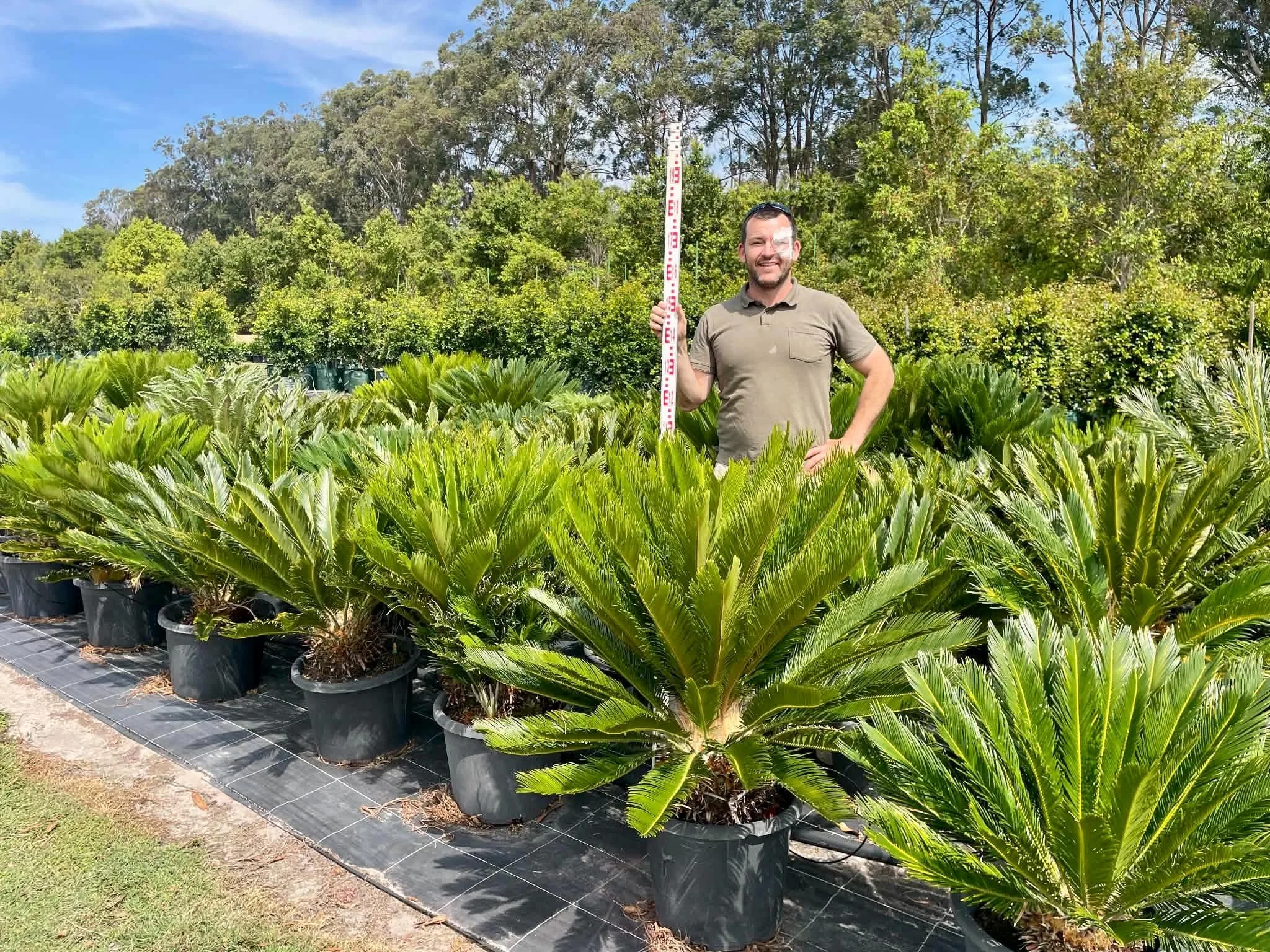
Cycas revoluta, most commonly known as the Sago Palm or Sago Cycad, is a slow-growing, long-lived evergreen perennial native to southern Japan. Despite its common name and palm-like appearance, it is not a true palm; it is a cycad, an ancient gymnosperm that is more closely related to conifers and pine trees; develops a low, rugged, shaggy trunk over time. Often referred to as a "living fossil," this resilient species has existed on Earth for over 100 million years, predating the extinction of the dinosaurs. Please note: Every part of Cycas revoluta—especially the seeds—contains the toxin cycasin. It is highly toxic to humans and pets if ingested, causing severe gastrointestinal distress, liver failure, or death. It should always be kept out of reach of animals and small children, and planted away from high-traffic walkways due to its sharp fronds.
Light requirement: Full sun to part shade.
Water requirement: In-ground plants require minimal extra watering, while potted sagos should be allowed to dry out completely between waterings. Overwatering easily causes root rot and yellowing fronds.
Watering frequency: Extremely waterwise and drought-tolerant once established.
Soil: Well-draining soil.
Skill level: Beginner
Growth rate: Very slow
Suitable for container gardens: Yes
Mature Height: 1.5 to 3m - takes decades to reach mature height.
Mature Width: 1-3m
Seasonality: Evergreen
Drought Tolerant: Extremely once established
Frost Tolerant: Light frost tolerant
Wind Tolerant: Good, including coastal conditions
Leaf colour: Features a striking rosette of dark, semi-glossy green, feather-like leaves. The leaflets are rigid with distinct recurved edges and sharp tips.
Leaf Variegation pattern: No
Size of leaf: 60-150cm long, and individual frond generally measures 20-25cm wide at its broadest point.
Flower : It is dioecious, meaning individual plants are either strictly male (producing a pollen cone) or female (producing a flower-like group of megasporophylls)
Flower Fragrance: Male cone is sweet, heavy perfume odor that strongly resembles pineapple
Flower Season: Late spring.